Most emergency supply lists assume a garage, a basement, or at least a pantry. A studio or one-bedroom has none of those, and a list that asks for forty gallons of water and a dedicated shelf of canned goods will go unused. The way to build emergency supplies for a small apartment is to pick gear that earns its space, then store it in places you were not using anyway.
This guide uses one rule to decide what to buy, then shows where each category can go. It also covers keeping a bag by the door, a ten-minute check each season, and what to buy first if you own nothing.
Why a small apartment needs a different supply list
A house can absorb a bulky kit. An apartment cannot, so the kit has to shrink or spread out. Several features of apartment living also change what you should own.
- Storage is the limit. Every cubic foot already holds something, so a supply that cannot be stored compactly will end up in the way, and items in the way get thrown out or never bought.
- You may have to leave on foot. If the elevator is out or the building is evacuated, you carry what you take down the stairs. A kit built around heavy items does not work for that.
- Open flame and fuel are poor choices indoors. Camp stoves, charcoal grills and fuel canisters create fire and carbon monoxide risks in a closed space, and many leases prohibit storing fuel. Your list should rely on food that needs no cooking and on battery-powered light.
- You probably cannot drill or build. Renters need storage that works without screws, shelving brackets or permanent changes.
None of this lowers the standard. It means each item has to justify the space it takes.
The two-job rule: how to decide what earns a place in your kit
An item earns a place if it passes at least one of two tests:
- It does two or more jobs. A headlamp lights a dark stairwell and leaves both hands free for carrying, and it also works for reading or first aid.
- It fits in dead space. Dead space is the gap under the bed, the strip above the closet rod, the inside of an ottoman, or the back of a door. If a supply fits somewhere you were not using, it costs you nothing to keep.
A third check helps with duplicates: does the item replace something you already own? A wool blanket already on your sofa can be your emergency blanket, as long as you keep it where you can find it. A flashlight in a kitchen drawer counts only if you could find it in the dark.
Some needs cannot be met by a two-job item. Drinking water does one job, and nothing else substitutes for it. These items pass on the second test alone, which means you find a dead space for them before you buy them. If you cannot find a place for a single-purpose item, choose a smaller version of it or skip it.
Water and food without a pantry
Water takes the most room, so plan it first. The common guidance from emergency agencies is one gallon per person per day, covering drinking and basic sanitation, and a baseline of three days. For one person that is three gallons, and for two people it is six. Check your local emergency management office, because some regions recommend a longer supply.
Here is how that fits in a small space:
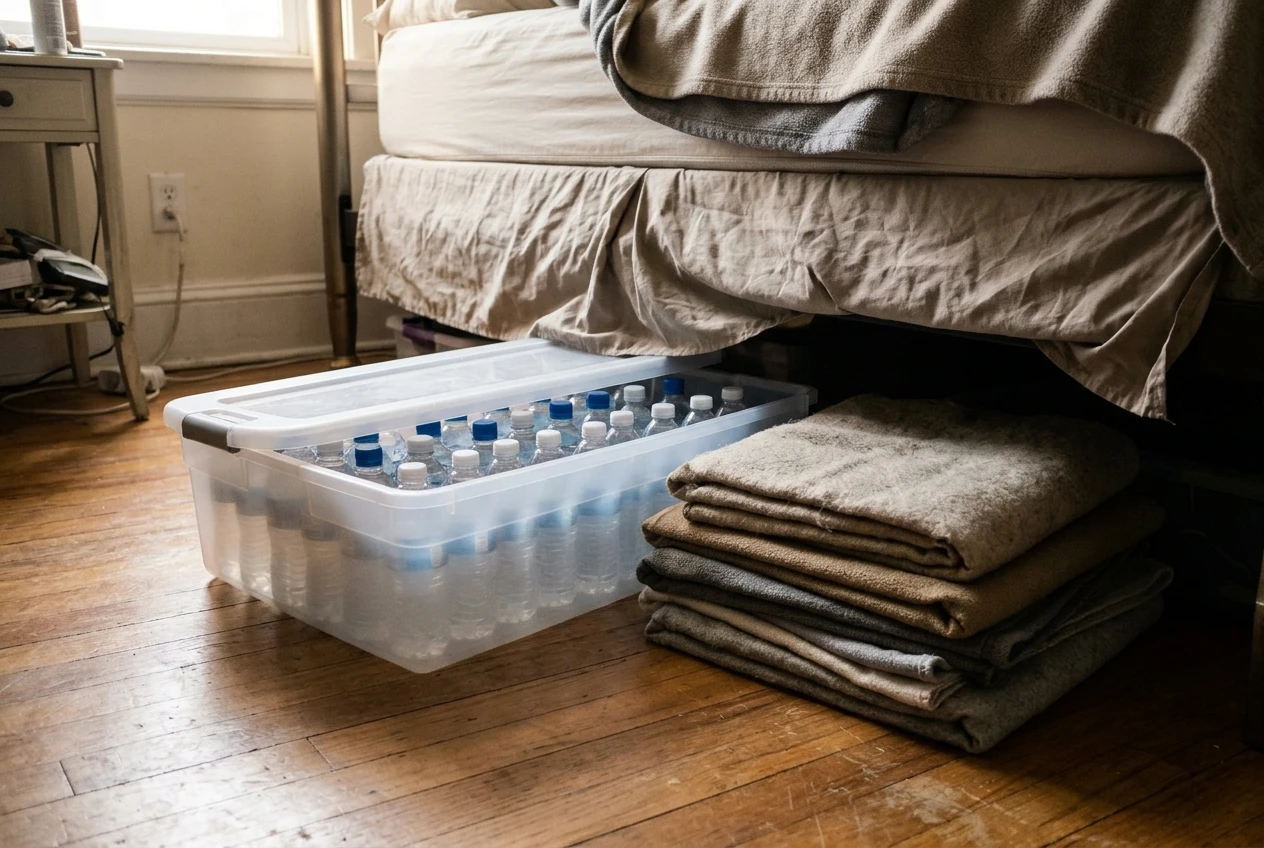
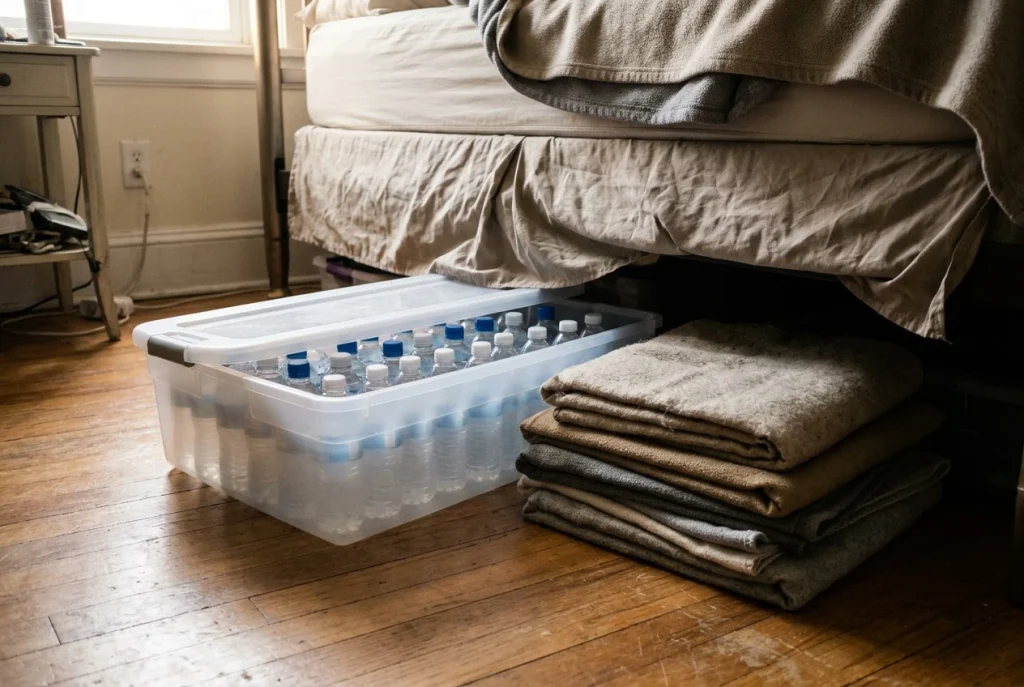
- Under the bed. Cases of commercially bottled water or flat, stackable water containers slide under many bed frames. Measure the clearance first, since frame heights vary a lot.
- In the bottom of a closet. Water is heavy, so keep it low. A closet floor is a safer place for it than a high shelf.
- In the bathtub, when you have warning. If a storm is forecast, a clean tub can hold water for washing and flushing. This supplements stored drinking water and is not a replacement for it.
- A backup purifier. Water purification tablets or a compact filter take almost no room and give you a way to treat water if your supply runs short. Check the product instructions for what it removes, since methods differ.
Food is easier, because you can use dead space in the kitchen. Choose items that need no cooking, little or no water, and that you already like to eat. Canned beans, tuna, peanut butter, crackers, dried fruit, nuts and shelf-stable milk are examples. Because you eat them in normal life, you can rotate them: buy a few extra, put the new ones behind the old ones, and the stock renews itself.
Pick cans with pull tabs, or keep a manual can opener with the food. The top of the kitchen cabinets and the space above the refrigerator are good spots for a small stock. Avoid keeping food under the sink, where leaks and cleaning chemicals are a risk.
Multi-purpose gear worth buying
This is the category where the two-job rule saves the most space. Check dimensions and listed specifications on any product before you buy, because compact gear varies in quality and in what it actually includes.
Light and power
- A headlamp replaces a flashlight and frees your hands for carrying, climbing stairs or treating an injury. Keep one at the bedside and one in the grab bag.
- A power bank charges your phone, which is your radio, flashlight, map and contact list. Keep it charged and check it each season.
- A hand-crank or battery radio is worth a look. Many models combine a radio, a small light and a USB charging port, so one device covers three needs. Read the specs, since the quality of the built-in features varies.
Warmth and shelter
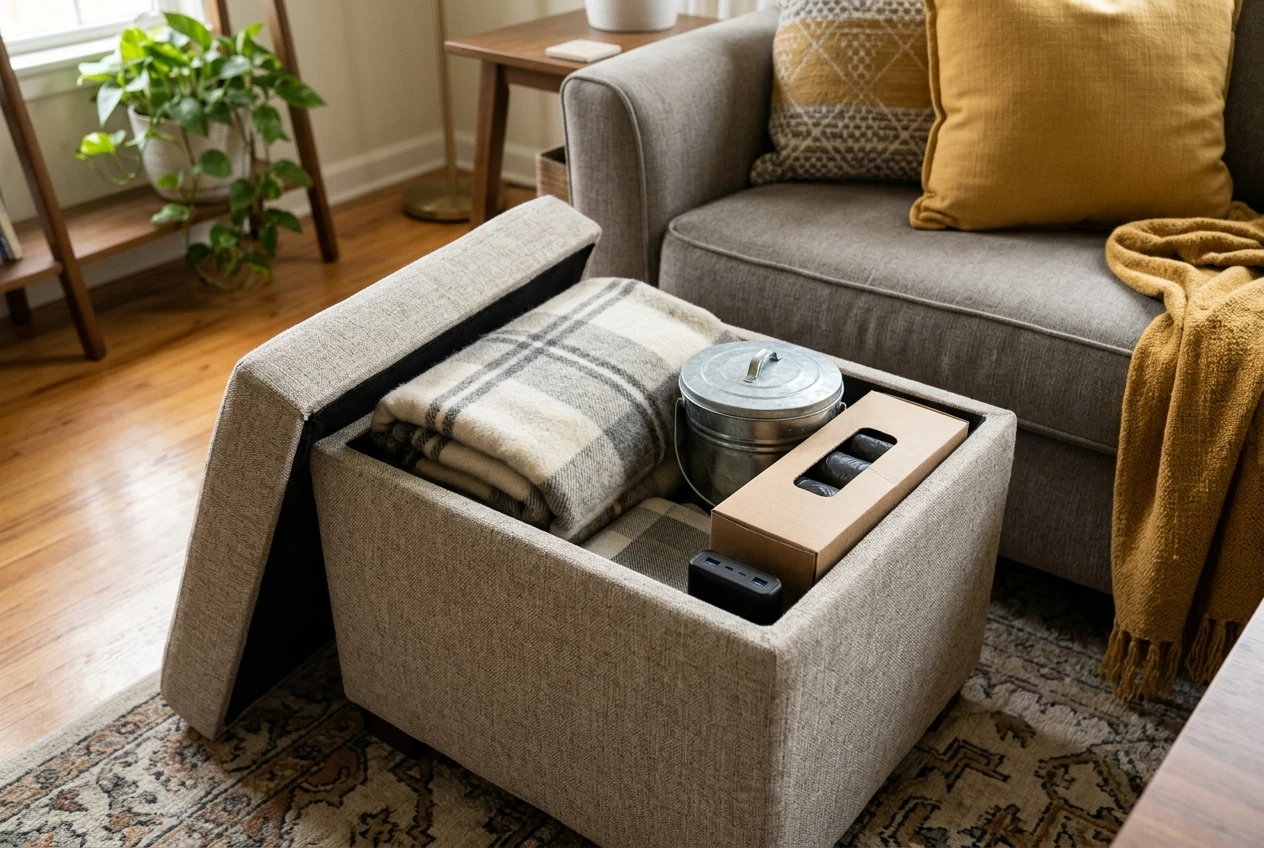
- A wool blanket or sleeping bag doubles as guest bedding in normal life and as warmth when the heat is out. Store it where you use it, not in a box.
- Mylar emergency blankets weigh little and fold small, so they suit the grab bag more than the stay-home kit.
- Heavy-duty trash bags work as rain ponchos, ground sheets, window covers and waste bags. A box takes almost no room.
Tools and sanitation
- A multi-tool replaces a small toolbox for most emergency jobs: cutting, opening cans, tightening screws.
- A lidded bucket stores supplies in normal times and works as an emergency toilet with bags and a little cat litter or similar absorbent. It nests in a closet and holds other items inside.
- A whistle signals for help and weighs nothing.
- Work gloves protect your hands from broken glass and debris.
First aid and documents
A first aid kit is a single-purpose item, so buy one compact enough to hang on a door. Add any medications you take regularly, and ask your pharmacist whether you can keep an extra supply on hand.
Keep copies of your ID, lease, insurance details and emergency contacts in a waterproof pouch. A small amount of cash in small bills is useful when card readers are down. All of this fits in a single pouch.
Know where your building’s shutoffs for water, gas and electricity are, and ask management if you are unsure. That costs nothing and needs no storage.
Vertical storage: over-door, under-bed, high-shelf and inside-furniture spots
Floor space is scarce, but walls, doors and the area under furniture are usually underused.
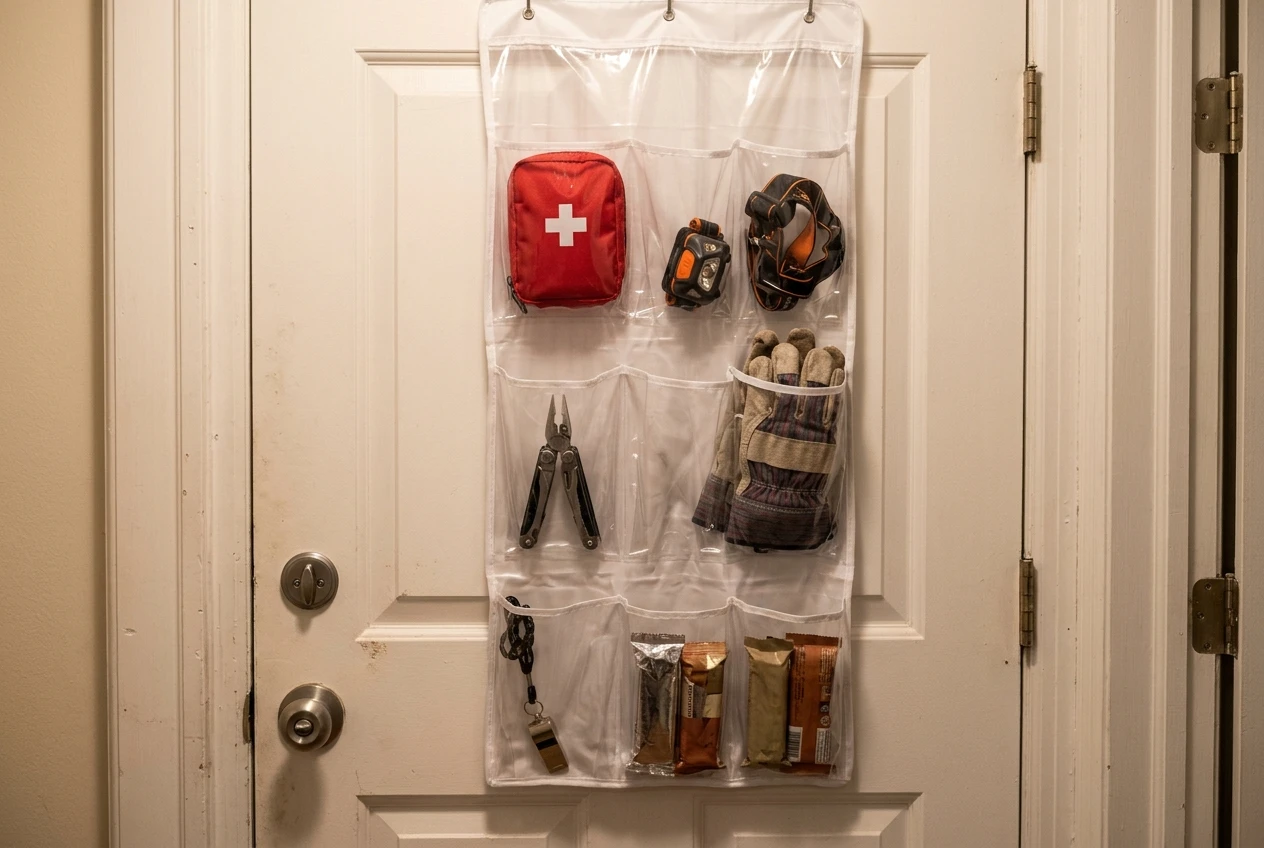
- Over the door. A clear-pocket over-door organizer holds a first aid kit, a headlamp, a multi-tool, snacks, gloves and a whistle in a place you can see. Check that the door still closes properly before you fill it.
- Under the bed. Flat lidded bins hold water, food and blankets. If the frame is too low, bed risers can add clearance, provided your lease allows them and the bed stays stable. Keep a pair of sturdy shoes and a flashlight under the bed as well, so you can reach them in the dark without stepping on broken glass.
- High closet shelf. Use it for light items you rarely need: spare blankets, extra clothing for the grab bag, a box of trash bags. Heavy items belong low, because they can fall in an earthquake and injure you.
- Inside furniture. A storage ottoman, a bench with a lift-up seat, a hollow coffee table or a bed with drawers can each hold a stay-home kit while serving as normal furniture.
- Behind the couch or beside the dresser. A narrow gap fits a slim bin or a rolled blanket.
- On hooks. Adhesive hooks rated for the weight can hold the grab bag by the door. Check the weight limit and buy hooks rated well above it.
Label every container on the outside so anyone in the home can find what they need without opening five bins.
Keeping a grab bag by the door and a stay-home kit separate
A grab bag and a stay-home kit serve different situations and should be separate.
The grab bag is for leaving quickly. It has to be light enough to carry down several flights of stairs. Keep it by the door or on the hook beside it, and pack:
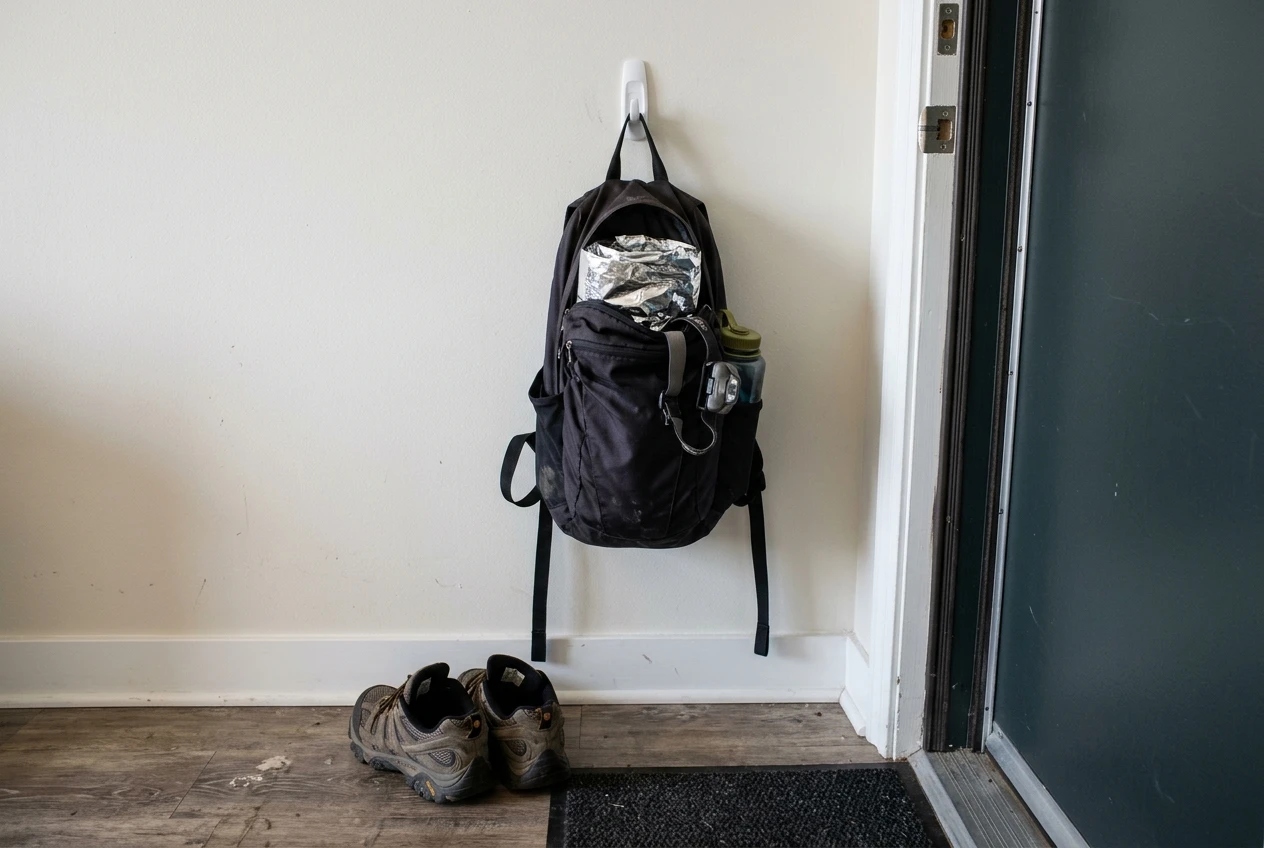
- a copy of important documents and some cash
- a spare supply of essential medications
- a power bank and charging cable
- a headlamp, whistle and mask
- one or two bottles of water and a few snacks
- a compact first aid kit
- a change of clothes and a mylar blanket
- a spare pair of glasses if you wear them
The stay-home kit is for sheltering in place when services are down. It holds the bulk: stored water, food, blankets, sanitation supplies, tools and spare batteries. It does not need to be portable, so it can live under the bed, in the closet and inside furniture.
Keep the two separate so that taking the grab bag does not empty the home kit, and so the bag stays light. If you borrow from either one, put the item back the same day.
A once-a-season check that takes ten minutes
A kit that has not been looked at for a year may hold expired food, dead batteries and clothes that no longer fit. Set a reminder at the start of each season, or tie the check to something that already happens each season, and work through this list:
- Dates. Check the dates on food, water, medications and first aid items, and move anything near expiry into your regular meals.
- Power. Recharge the power bank and test the headlamp and radio. Replace batteries if needed.
- Clothes. Swap the grab bag clothing for the coming season.
- Documents and cash. Confirm the copies are current and the cash is still there.
- Contacts. Check that the emergency contact list matches your phone.
- Placement. Make sure nothing has been piled in front of the bins and the grab bag is still by the door.
Where to start this weekend if you own nothing yet
You can build a working kit in two short sessions without buying much.
First session: look. Walk through the apartment and note every gap: under the bed, above the closet rod, behind the door, inside furniture. Measure the ones that look promising. Then collect what you already own that counts: a blanket, a flashlight, a can opener, a first aid kit, canned food you like. Put those in one place.
Second session: buy the gaps. Start with water, since it takes the most planning. Add a headlamp and a power bank. After those, add the over-door organizer or a lidded bin, and fill them with what you gathered. Make a labelled folder or pouch for documents and cash.
That is enough to cover water, light, power, first aid and documents. You can add warmth, tools and sanitation supplies in the following weeks, one item at a time, always checking the two-job rule first.
For the wider plan that goes with these supplies, including how to think about the whole space, read the 600 square foot preparedness guide. Then pick one item from the two-job list above and add it to your kit this week.