
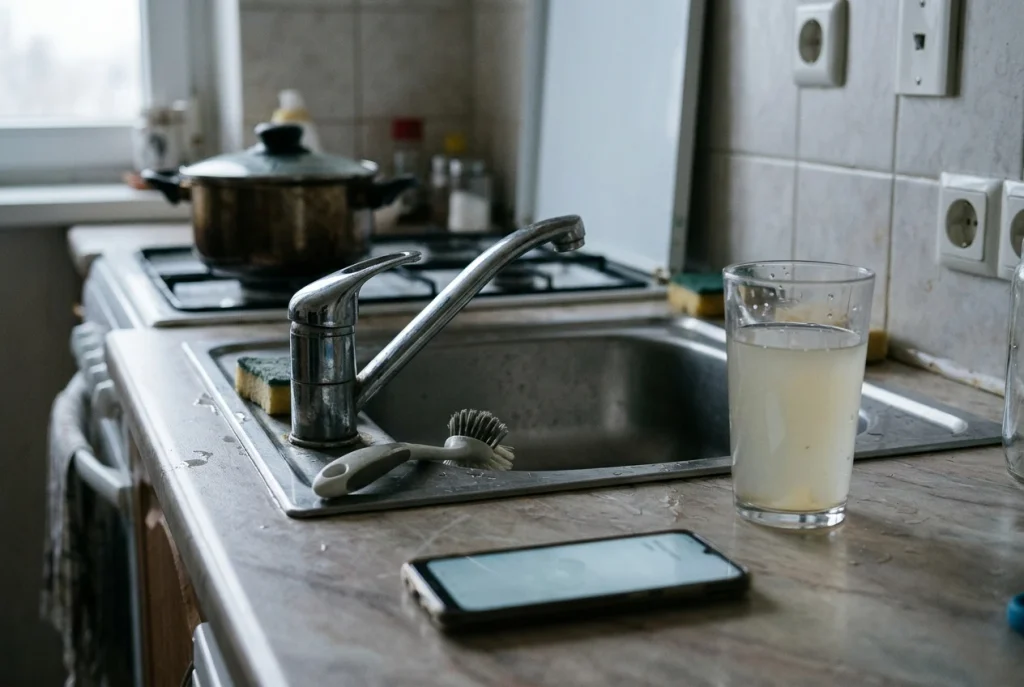
Water is the one emergency supply you can’t do without for more than a few days, and a compact filter is one of the few items that can extend a stored supply. A filter turns questionable water into safer water, but it can only work with water you already have access to, and it does not cover every kind of contamination. Stored water does not have either limit.
This guide compares the main compact filter types against one test: does it earn a spot in a kitchen drawer or on a shelf in a small apartment, and does it help with the water problems cities actually have? It also says plainly what filters cannot do.
Why a Filter Is a Backup to Stored Water, Not a Replacement for It
The usual planning figure from emergency agencies is one gallon of water per person per day, for drinking and basic hygiene. Stored water meets that figure on day one with no effort. A filter only helps once you have something to pour through it.
That is the limit most people miss. If the taps are off, a filter in the drawer has no source. You would need a bathtub you filled early, rainwater, or a stream or lake within walking distance, and in a city those outdoor sources often carry chemicals and runoff that most compact filters do not remove.
A filter does one job well: it stretches your stored water, and it makes questionable water safer to drink when a source is available. Think of the stored water as the plan and the filter as the second layer. If you need help with the first layer, our guide to storing emergency water in a small apartment covers it, and the link is at the end of this article.
What a City Water Emergency Actually Looks Like
Most urban water emergencies come in three forms, and each calls for a different response.
Boil-water notices. The utility tells you the tap water may contain harmful bacteria or other organisms, often after a pressure drop, a treatment problem or a main break. Water still comes out of the tap, but it should not be drunk untreated. Boiling is the standard instruction, and it kills viruses as well as bacteria and protozoa. A filter is a second option, but only if it is rated for what the notice is about. Check what your local utility says.
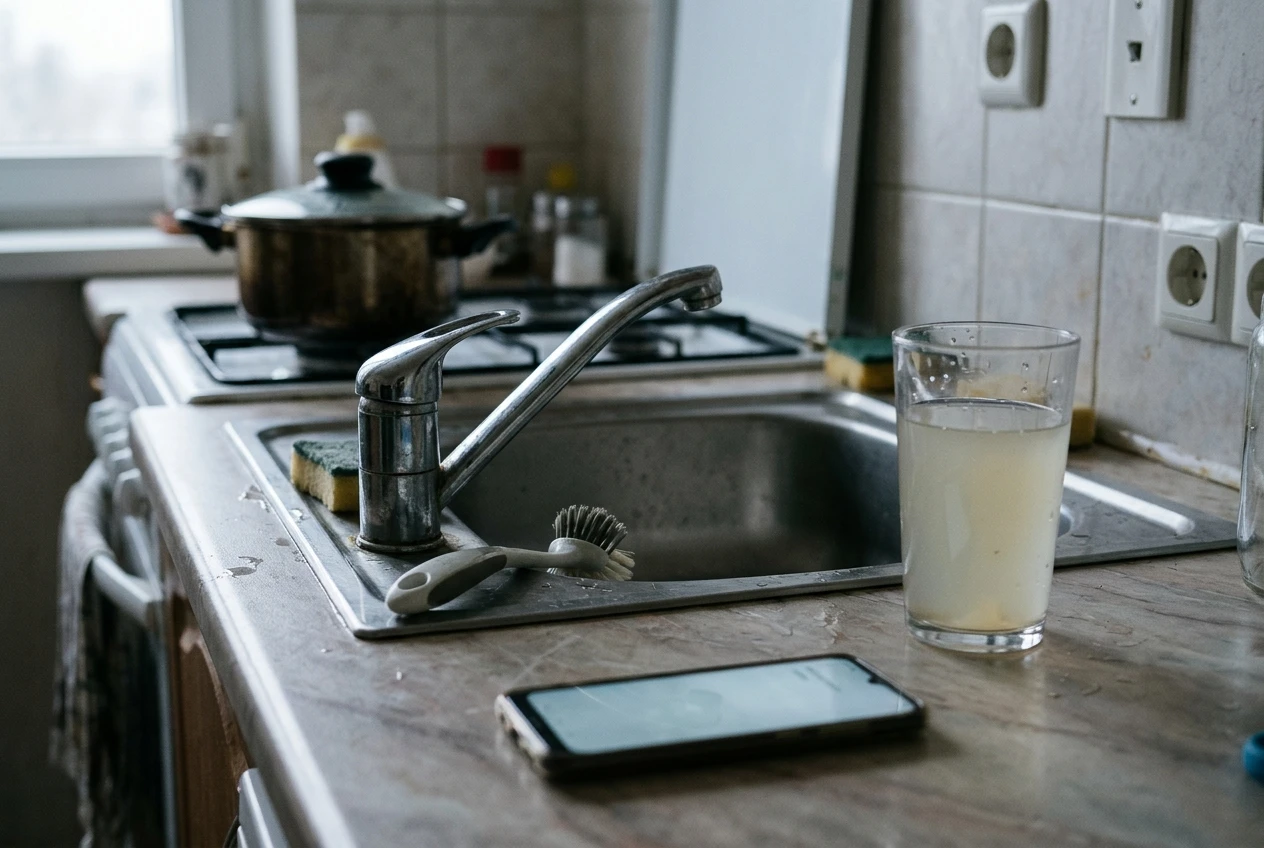
Main breaks and low pressure. A broken main can stop the flow completely or lower the pressure enough that outside material enters the pipes. Service often returns before the water is declared safe. Water that is cloudy or discoloured is a reason to treat it, or to leave it alone.
Outages. When the power fails, water pumps can stop. In some buildings, especially taller ones that rely on pumps to move water upward, the taps can slow or stop even when the city supply is fine. This is a case where stored water matters most, because you may have no tap water to filter at all.
Notice what these have in common. In each case the real question is what is wrong with the water, and a filter answers some of those questions and not others.
Straw, Squeeze, Pump, Gravity and Bottle Filters in a Kitchen, Not on a Trail
Most reviews of these filters are written for hikers. A kitchen has different needs: you want to fill a pot or a jug, you have a sink and a counter, and weight does not matter. Here is how each type works in that setting.
Straw filters
A straw filter is a tube with a filter inside. You put one end in water and drink through the other. It is the smallest and usually the cheapest type, and it takes almost no space.
The drawback at home is that it is built for drinking directly from a source. Filling a pot for cooking or a jug for the next day is awkward, and sharing it between people is not ideal. It suits a single person’s backup supply or a go-bag more than a household.
Squeeze filters
A squeeze filter screws onto a soft pouch. You fill the pouch with water and squeeze it through the filter into a cup, bottle or pot. It is light, flat and small enough for a drawer.
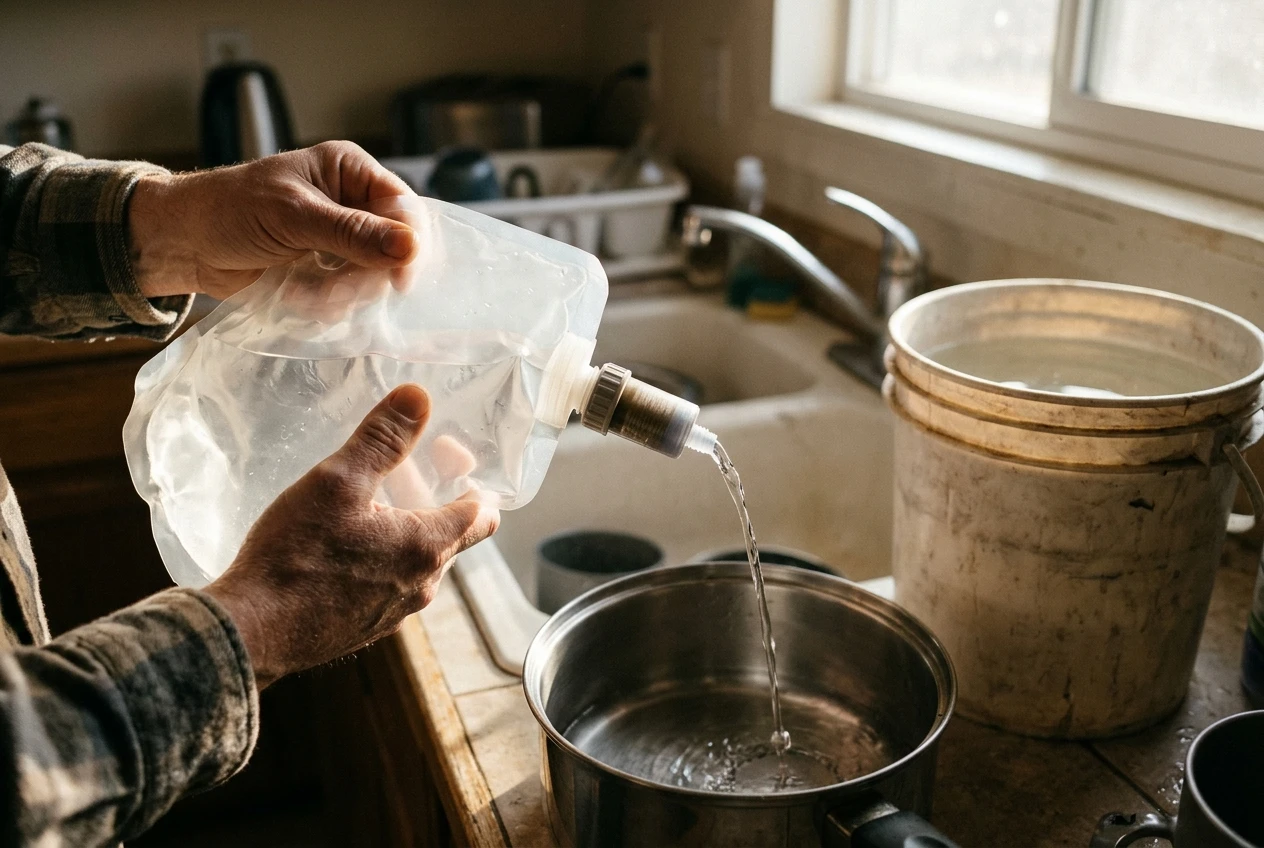
This is the most versatile type for a small apartment. You can fill the pouch from a bathtub, a bucket or a questionable tap, and the output goes into any container you own. The trade-off is effort: squeezing out a few litres takes a while, and the filter needs to be cleaned by backflushing, which means pushing clean water back through it to clear the pores.
Pump filters
A pump filter has a hose, a hand pump and a filter body. You put the intake hose in the water and pump the output into a container. It filters quickly and has no pouch to fill.
It is also the bulkiest of the five, and pumping is tiring if you are filtering for more than one person. In a small apartment it takes the most room for the least extra benefit, so it only earns a place if you expect to filter from a bucket or a large container regularly and want the speed.
Gravity filters
A gravity filter is a bag or reservoir that hangs from a hook. Water drips through the filter into a clean container below, with no pumping or squeezing. You fill it, hang it from a door or a shower rod, and walk away.
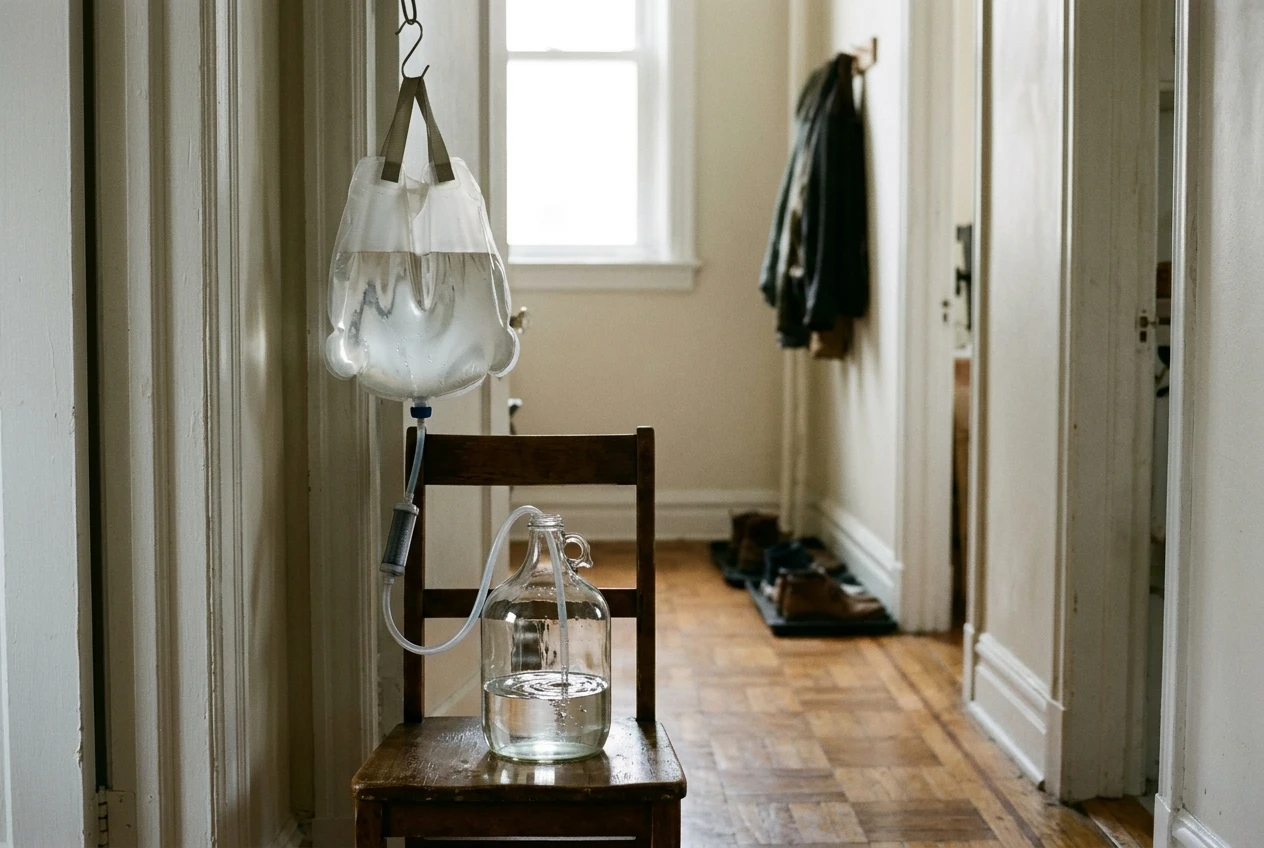
This is the best fit when you need water for a household rather than a person. It handles larger volumes with the least effort. The bag folds flat when empty, and it needs a hook or a hanging point plus a clean container underneath. Setup takes longer, but the filtering needs no attention.
Drop-in bottle filters
This type is a bottle with a filter built into the cap or lid, or a filter that sits inside a bottle. You fill the bottle from a questionable source, and the water is filtered as you drink or pour.
It is the simplest to use and is also useful in ordinary life, which means it gets used and stays in working order. The limit is capacity: a bottle holds a bottle’s worth. It suits one person drinking, not a family filling pots.
What to Check on Any Filter Before You Buy
Specifications vary a lot between products, and the packaging does not always make them easy to compare. These are the four things to check.
- What it removes. Look for the organisms the filter is tested against: bacteria and protozoa are the common ones. Many hollow-fibre filters remove these but do not remove viruses. If the product states a pore size and a test standard, read both.
- What it does not remove. Most compact filters do not remove dissolved chemicals, heavy metals, salt or fuel. Some include activated carbon that improves taste and reduces certain chemicals, but a carbon element is not a guarantee against chemical contamination. If the problem is a chemical spill or industrial runoff, a filter is the wrong tool.
- Flow rate. A slow filter feels like a small issue until you are filtering water for a family. Check the stated flow rate, and think about how many litres you would need to produce each day.
- Cleaning and lifespan. Check how the filter is cleaned, how many litres it is rated for, and whether the replacement cartridge is available. A filter that clogs and cannot be cleaned will fail when you need it. Most hollow-fibre filters should also be protected from freezing, which can crack the fibres without any visible sign, so check the maker’s storage guidance.
Our Picks for the Drawer: Which Type Suits Whom
Rather than naming a single winner, here is which type to look for depending on your home. Specific models change often, and prices and specs change with them, so check current details at the retailer before buying.
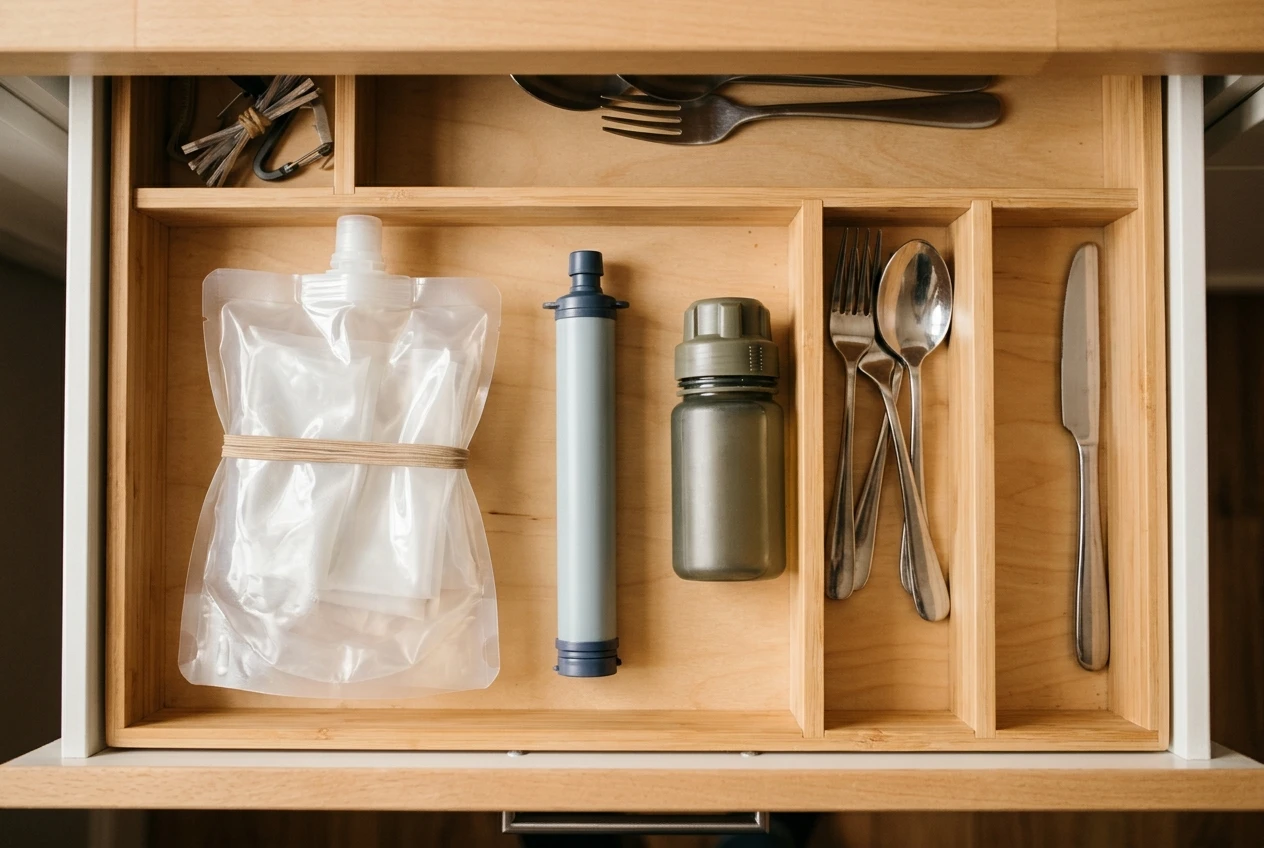
Best all-rounder for a drawer: a squeeze filter with a pouch. It folds flat, works with any container, and handles both a boil-notice situation and filling from a bathtub or bucket. If you only buy one, this is the one that fits most small apartments and most scenarios.
Best for a household: a gravity filter. If you live with a partner, family or housemates, a gravity system produces more water with less work. It takes a little more space and a place to hang it, which is worth it if more than one person depends on it.
Best for one person or a go-bag: a straw filter. It costs little, fits in a pocket and works as a backup to your backup. It should not be your main plan for a household.
Best for everyday use: a bottle with a built-in filter. If you will actually use it daily, you will also know how it works and when the filter needs replacing. That familiarity is useful.
Probably skip in a small apartment: a pump filter. It works well, but it is the bulkiest option and its main advantages matter more outdoors than in a kitchen. If you already own one, keep it; if you are buying new, one of the others is a better use of space.
Whichever you choose, look for a filter that states what it removes in plain terms, lists a rated capacity and has replacement parts available.
How to Use and Test Your Filter at Home Before You Need It
A filter you have never used is a filter you cannot rely on. Spend twenty minutes on it while everything still works.
- Read the instructions in full. Most failures come from assembling it wrong or skipping the first-use rinse.
- Run clean tap water through it. This confirms the parts fit and shows you the real flow rate. Time how long a litre takes, so you know what to expect.
- Practise the cleaning method. For a squeeze filter this means backflushing. Do it once so it is not new to you under stress.
- Try filling from a container other than the sink. A bucket or a large pot is a realistic stand-in for a bathtub or other source.
- Dry it properly and store it as directed. A damp filter stored in a closed bag can grow mould, and a frozen one can fail.
Testing at home will not tell you whether the filter removes a particular contaminant, because you cannot see that. It tells you whether you can operate it, how fast it runs and whether it leaks. Those are the problems you can fix before an emergency.
Where to Keep It, and What to Pair It With
Keep the filter somewhere you can reach without moving other things: a kitchen drawer, a shelf by the door or the box where you keep your other emergency supplies. Our guide to emergency supplies that earn their space in a small apartment can help you decide what else belongs there. Store the instructions with it, and a note of the date you last cleaned it.
A filter works best as part of a small set of items:
- Stored water. This is the base of the plan, since it needs no source and no effort.
- A backup treatment method. Boiling needs a heat source and a pot. Unscented household bleach or purification tablets are alternatives that take almost no room. Follow the instructions from a health authority or the product label for amounts and contact time, and do not guess.
- A clean container to fill. A filter needs somewhere to send the water. A few food-grade containers with lids, kept clean, make filtering practical. Dirty containers can undo the work of the filter.
- A way to collect water. A bathtub liner or a few large clean containers let you fill up when you get advance warning, such as before a storm or a planned shutoff.
A compact filter takes up little space and costs little compared with how useful it is when you have a source of water and no safe way to drink it. Keep that limit in mind, pair it with water you have stored, and it does its job.
Next Step
Check the current price and specs of the filters we recommend at the retailer’s site, and read our guide to storing emergency water in a small apartment to build the other half of your water plan.