
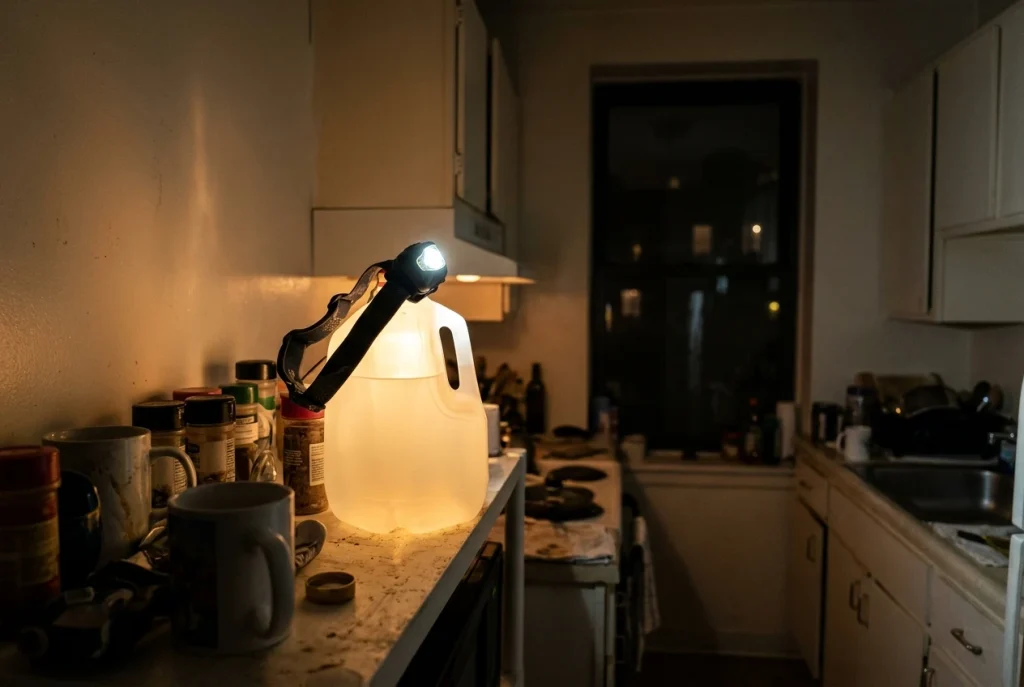
When the power goes out in a small apartment, the first thing you need is light and two free hands. You might be carrying a pot of water off the stove, finding a phone charger, or checking a fuse box in a hallway. The best headlamp for a power outage is the one that gives you enough light, for long enough, after sitting in a drawer for a year. It is rarely the one with the biggest number on the box.
This guide covers what to look at instead, in the order it matters for a city apartment, and ends with a checklist and a test to run the day it arrives.
Why a headlamp beats a flashlight in a small apartment
A flashlight needs a hand, or a spot to rest it, or a grip between your chin and shoulder. In a 600-square-foot home, nearly every outage task needs both hands: opening a cabinet while you look inside, reading a label, helping a child, wiping a spill, working the latch on a window.
A headlamp points where your head points, so the light follows your eyes. That matters most for close tasks, which are the majority of what you do indoors.
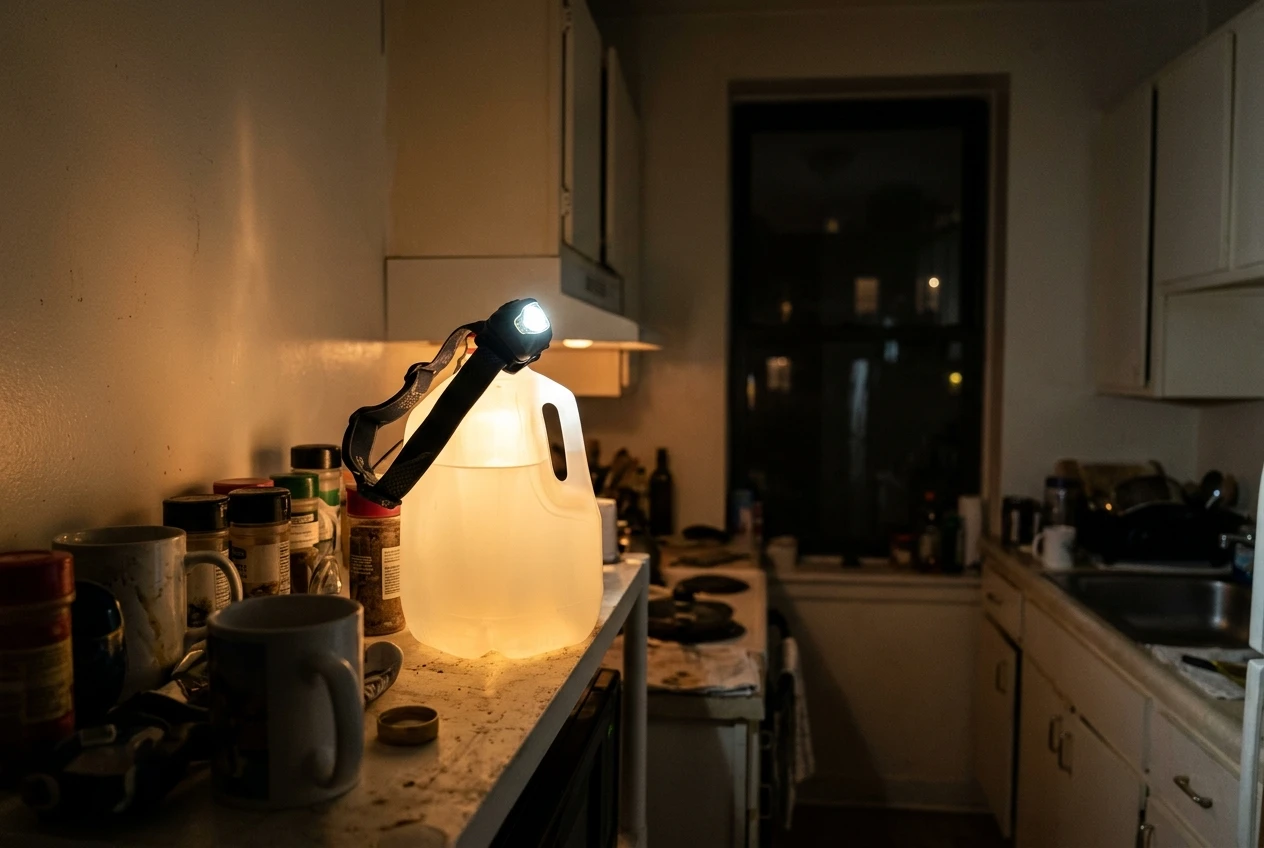
A headlamp also works as a small room light. Tilt it up against a ceiling or a pale wall and it spreads a soft glow across the room. Some people stand a headlamp on a shelf with the lens against a water jug or a bottle of water. A flashlight does not manage this as well.
A flashlight still has a place, for checking the stairwell or looking out a window. But if you have room for only one or two items, a headlamp covers more of what you will actually do.
Why lumens are the wrong number to shop by indoors
Lumens measure maximum output, and maximum output is the setting you will use least. Indoors, walls sit a few feet away. A very bright beam on high bounces off them, glares on glossy surfaces, and drains the battery fast. It is also unpleasant for anyone else in the room.
For reading, cooking by hand, walking a hallway, or finding something in a cupboard, a low setting is usually enough. A beam in the range of 10 to 30 lumens is a reasonable target for most close indoor work. Beyond that, extra output mostly buys outdoor range you will not need in a stairwell or a kitchen.
So read the spec sheet for a different set of numbers:
- Does the lamp have a genuinely low setting, not just “low” that is still very bright?
- How long does it run at that setting?
- Can you reach that setting quickly, without cycling through high first?
A headlamp that starts on its brightest mode every time can be annoying and wasteful in the dark. Look for a model that remembers its last mode, or one where a single press gets you to low.
Battery life that matters: runtime on low
Think about the outage you are planning for. If it lasts four nights and you use light for a few hours each evening, you need a lamp that gives you that many hours without a recharge or a battery swap. Add a margin for the nights you use it longer.
Manufacturers usually list runtime for several modes. The figure that matters is the one for your low setting, and the claim deserves some scrutiny:
- Look at how runtime is defined. Many brands follow the ANSI/FL1 standard, which counts runtime until output falls to 10 percent of its starting level. That means a lamp can be “running” while giving very little light. A lamp that is still dim but usable at the end is better than one that technically runs for longer but fades early. Brands vary in how clearly they say this, so check the fine print.
- Check whether the output is regulated. In a regulated lamp, brightness stays roughly steady and then drops off near the end. In an unregulated lamp, it dims gradually from the start. Neither is wrong, but you should know which you are buying.
- Note which battery the figure assumes. Runtime is often quoted for one battery type. If the lamp accepts several, the numbers differ.
The spec sheet usually leaves out how the lamp behaves when the battery is low. Some lamps warn you with a blinking indicator, some drop to a low mode automatically, and some just die. A battery indicator you can see or a low-power warning is worth more in an outage than a few extra lumens.
Rechargeable or replaceable batteries: which one fits an outage plan
This is the choice that decides whether the lamp still works on the fourth night.
Replaceable batteries (AAA or similar) can be swapped in seconds. A spare set in a drawer means a flat lamp is back in use right away, with no power needed. Lithium primary cells keep their charge in storage for a long time compared with ordinary alkaline cells, which are cheaper but can leak if left inside a device for years. If you choose replaceable cells, store spares in a small bag with the lamp and check them when you check your smoke alarm.
Built-in rechargeable batteries are convenient in normal life. You top up from a USB port and the cost per use is low. In an outage, though, recharging depends on a power bank, a laptop with charge left, or a car outlet. If the lamp is not charged when the lights go out, and your backup is also flat, you have no light. Rechargeable cells also lose charge slowly in storage, so a lamp left in a drawer for months may be partly empty when you reach for it.
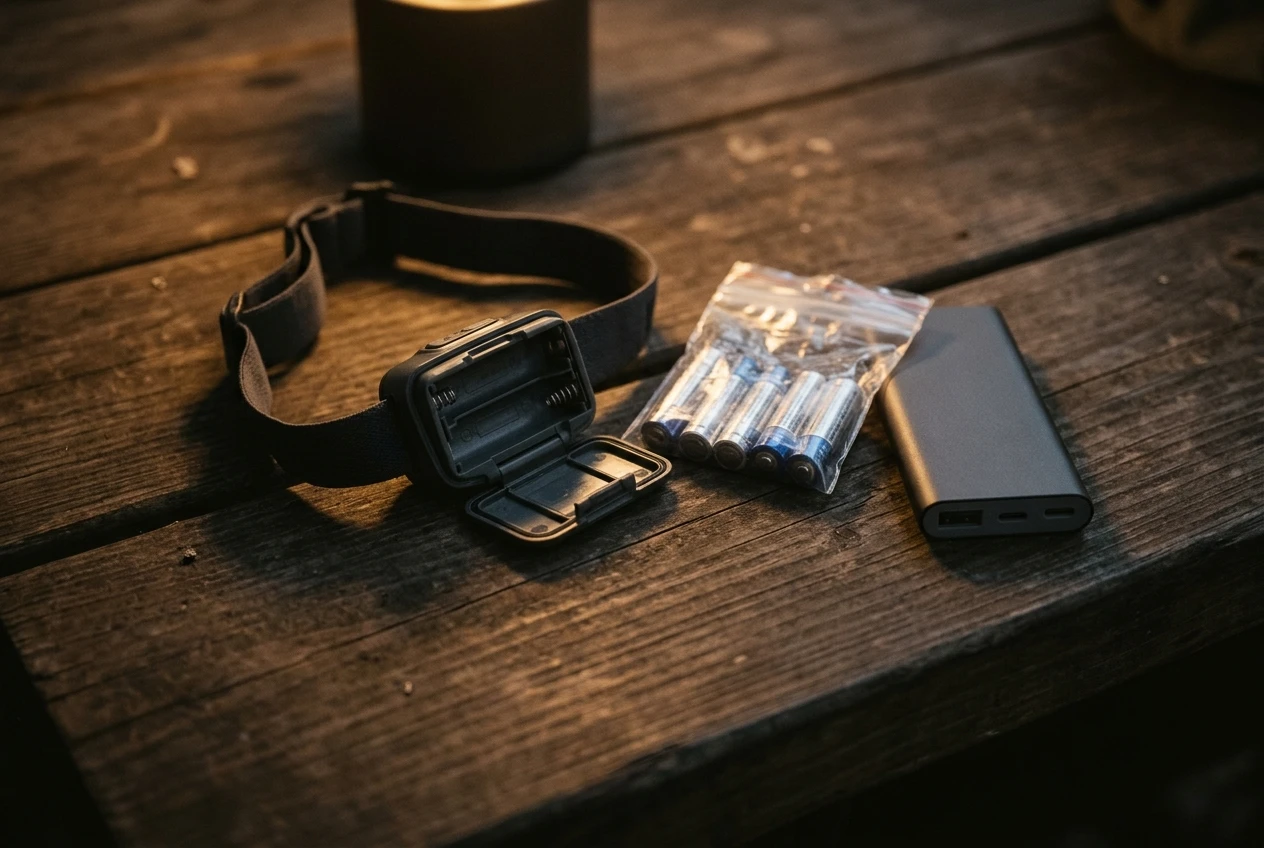
Hybrid lamps accept either a rechargeable pack or standard batteries. For a small apartment, where you can keep one compact item and a few spare cells, this is the most flexible option. You get the day-to-day convenience of recharging, and a fallback that needs nothing but a fresh set of batteries.
A simple rule: if your plan includes a charged power bank, a rechargeable lamp can work. If it does not, choose replaceable batteries, or a hybrid.
Durability checks: water, drops, and a switch that stays off
A headlamp in an outage plan lives in a drawer, a bag, or a shelf, and sometimes gets dropped on a tile floor in the dark. Three features are worth checking.
Water resistance. Look for an IPX rating. IPX4 means the lamp tolerates splashes, which is enough for steam, a wet hand, or a leaking pipe nearby. IPX7 means it survives brief immersion. For indoor outage use, IPX4 is a sensible minimum, and a higher rating adds margin if a pipe bursts or you carry it outside in rain.
Drop resistance. Some manufacturers state a drop rating, commonly given in meters. A claim of one meter or more covers a fall from head height onto a hard floor. If no rating is listed, press on the battery cover and the lens, and check whether the housing feels solid.
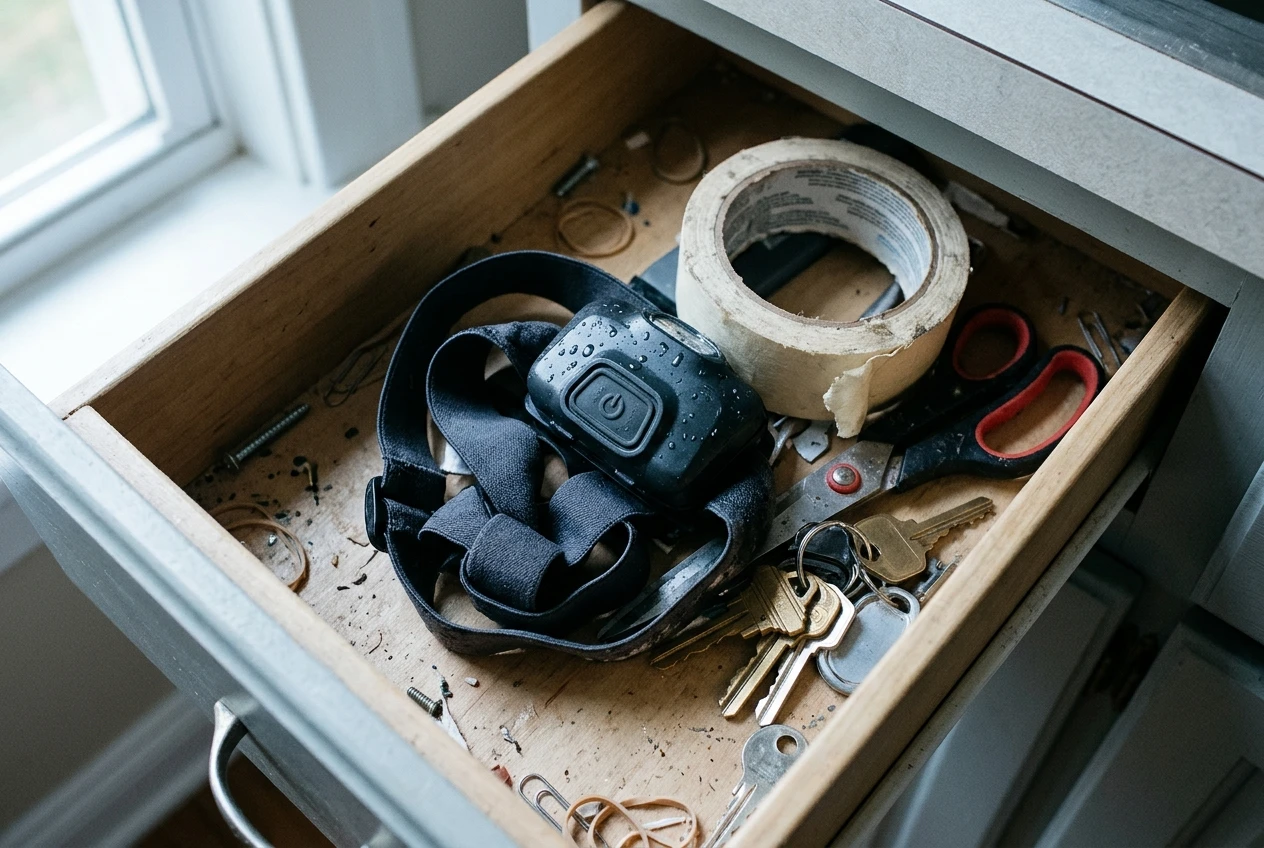
A switch that cannot turn on in the drawer. This is the one most people overlook. A lamp whose button is pressed by other items in a bag will switch on and drain itself, and you find a dead lamp when you need it. Look for a recessed button, a lock mode, or a battery you can flip or loosen. Lock mode is covered in the next section.
Features worth having: red light, lock mode, a comfortable strap
Three features are worth paying for in a small home, and most others are not.
Red light. A red mode keeps your eyes adjusted to the dark and does not wake others sleeping nearby. It works for checking on a child, moving around at night, or reading a label without flooding the room with white light. It is also usually gentle on the battery.
Lock mode. This stops accidental activation. Typically you hold the button for a few seconds to lock or unlock it. Check that you can do it by touch, and that the lamp does not need a complicated sequence.
A comfortable strap. You may wear this for hours. A strap that is wide, soft, and adjustable works better than a thin one that digs in. Try the lamp on and check that it sits steady when you bend over or look down, and that it does not slip over your forehead. A small tilt mechanism lets you aim the beam downward for close work.
Features you can skip in this setting include very high maximum output, long throw beams, and extra modes you will never reach.
Where to keep it so you can find it in the dark
A headlamp is useless if you spend ten minutes looking for it. Pick one fixed place and keep it there.
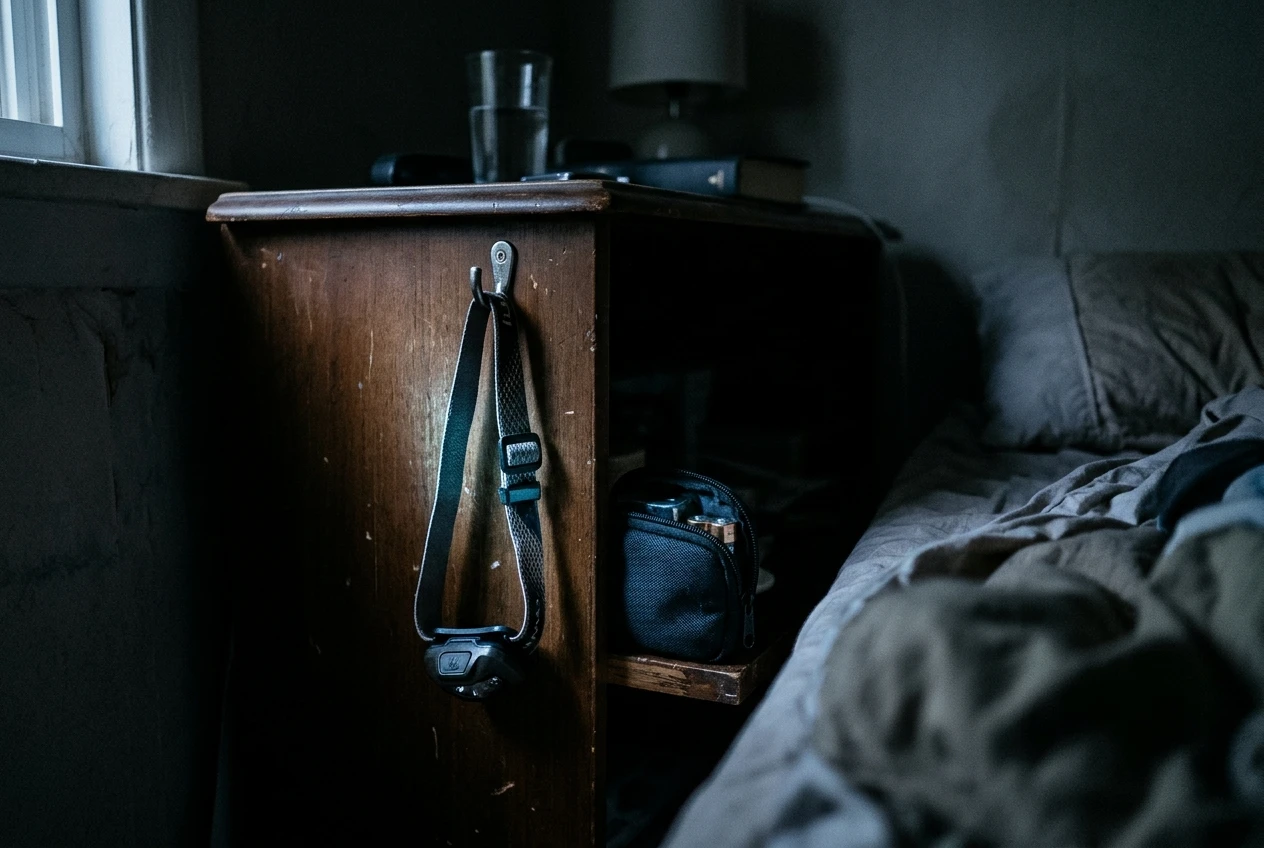
- Near the bed. A hook, a bedside drawer, or a pocket on the side of the nightstand means you reach it without standing up.
- In a place you can find by touch. Choose somewhere with a clear, consistent location, not the bottom of a pile.
- With its spare batteries or a charged power bank. Keep them in the same bag so nothing is missing when you need it.
- Everyone knows where it is. If you share the home, show each person the spot.
If you have room for two, put one by the bed and one near the door or the kitchen. You are then covered whether the outage starts when you are asleep or cooking.
A simple pre-purchase checklist and a test to run when it arrives
Before you buy, check each model against these points:
- A low setting suited to indoor use, and a runtime listed for that setting.
- A clear definition of how runtime is measured.
- A battery type you can replace without power, or a hybrid design.
- At least an IPX4 water rating.
- A stated drop rating, or a solid, well-sealed body.
- A lock mode or a recessed button.
- A red light setting.
- A strap that stays put and is comfortable for long wear.
When the lamp arrives, run this test before you put it in the drawer:
- Charge or load it. Use fresh batteries or a full charge.
- Run it on low for one evening. Wear it while you do something ordinary, like reading or tidying. Note whether the light stays steady and whether the strap stays comfortable.
- Check what is left. If it dimmed noticeably or the battery is nearly empty, the real runtime is shorter than the claim.
- Try the lock mode. Lock it, drop it in a bag with other items, and confirm it stays off.
- Test the spare. Make sure spare batteries or your power bank actually work with it.
- Set a reminder. Check the lamp every few months, and replace or recharge batteries as needed.
A lamp that passes this test is ready for a long outage. To see where it sits among the other items worth keeping, read the post on which emergency supplies earn their space in a small apartment.