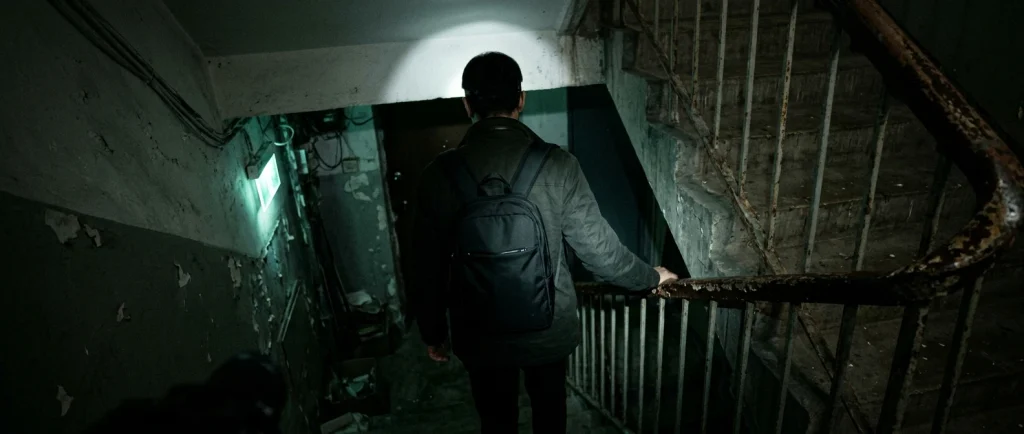
If you live on the tenth floor and the elevator stops, your go bag has a different job from the one in most checklists. It has to travel down ten floors of stairwell, possibly in the dark, possibly alongside neighbours, and then keep going on foot. A bag built for a campsite can fail at the first landing.
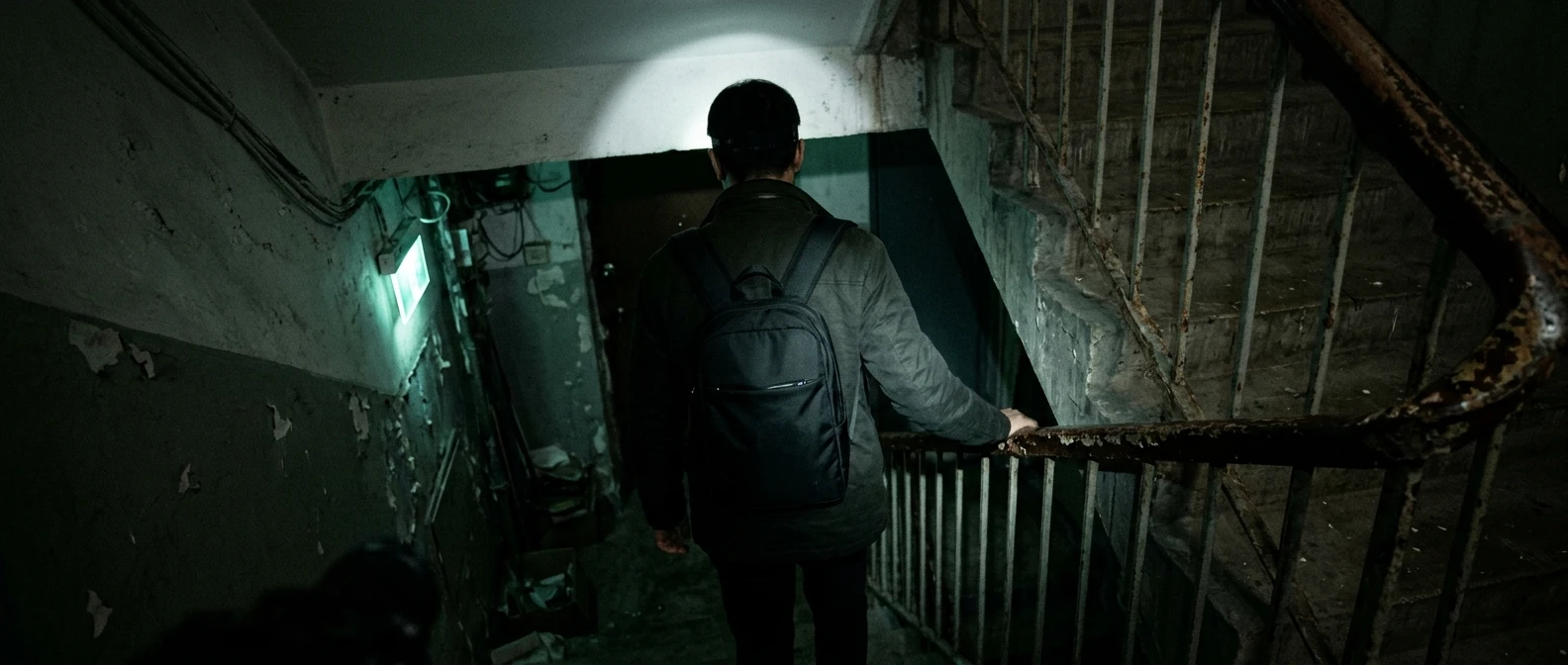
That changes what belongs inside. A go bag for an apartment high-rise gets ranked by one question: does this help me get down the stairs and through the first few hours outside? Anything that fails both halves of that question stays home.
Why a tenth-floor go bag is planned around the stairs, not the campsite
Camping gear assumes you walk out to a car, drive to a site, and set up in daylight with both hands free. A tenth-floor evacuation looks different. You leave through a narrow, enclosed space, often with other people moving in the same direction, and you may need a hand free for the railing at every turn.
Three constraints follow from that.
- Weight matters more than capacity. Ten floors of stairs punish every extra pound, and you may still have to walk a long way after reaching the street.
- Shape matters. A bag that sticks out sideways catches on rails and on other people. A compact, close-fitting pack is easier to carry on a crowded stair.
- Access matters. Your light, your phone, and your ID should be reachable without stopping and unpacking in a stairwell where people are behind you.
Plan for the descent first and the street second. Supplies for several days at home belong in your apartment, where weight costs you nothing. The bag only has to cover the trip out and the first hours after.
Weight and shape: a bag you can carry down ten flights and keep carrying
Pick a backpack, not a duffel or a tote. A backpack with a padded hip belt or at least a chest strap keeps the load on your torso and leaves your hands free. A bag that swings from one shoulder will swing into the wall at every turn.
A sensible approach is to decide on the weight you are willing to carry before you buy anything, then fill the bag to that limit and stop. Pack it, put it on, and walk up and down your own stairs. If you are tired and uncomfortable after a few floors, it is too heavy, and the fix is removing items, not toughing it out. Children, older adults, and anyone with a bad knee or back should set the limit lower.
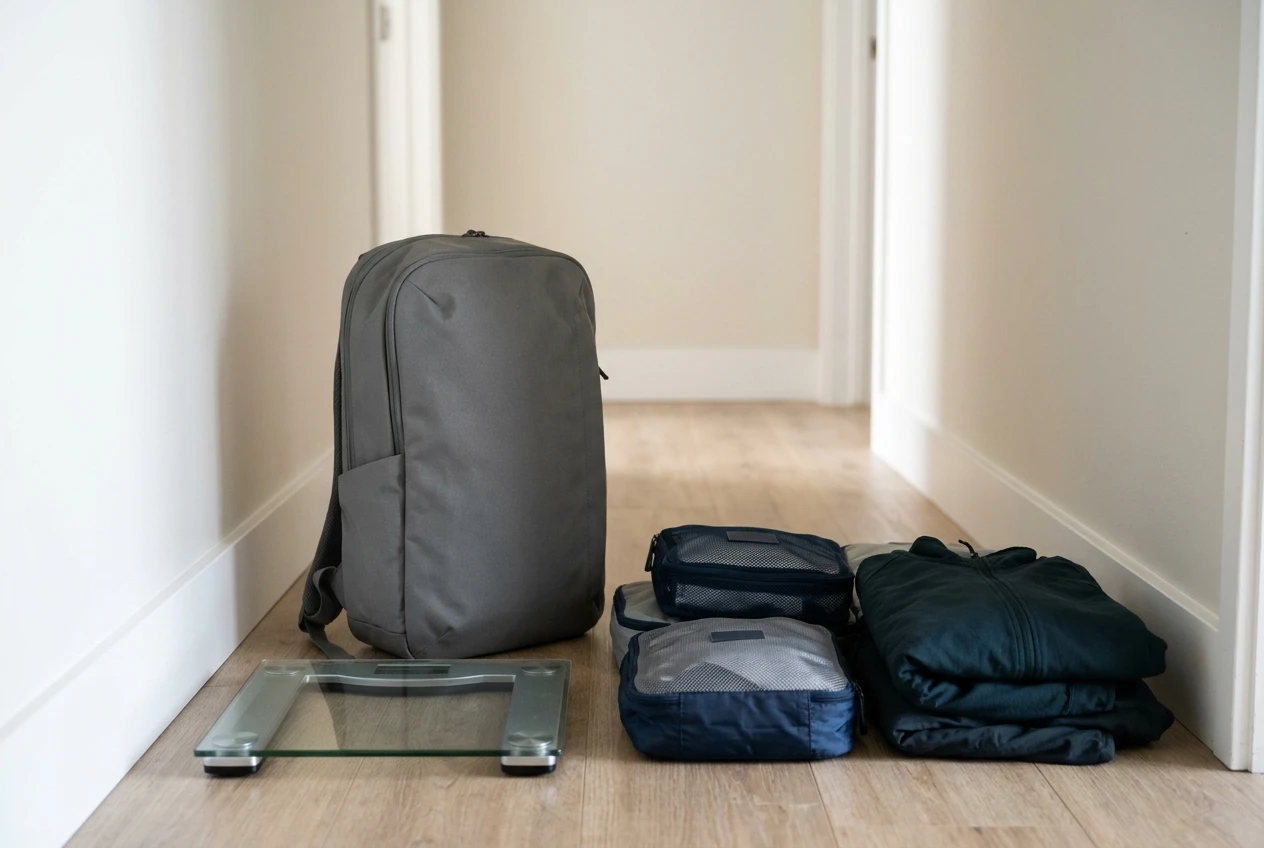
Some packing habits help on stairs:
- Put the heaviest items close to your back and in the middle of the bag, so the load does not pull you backward.
- Pack soft items on the outside, so nothing hard digs into your spine.
- Zip everything shut and tighten the straps. Loose straps dangle and snag.
- Keep the bag narrow. A slim pack passes other people more easily than a wide one.
- Use a few small pouches inside so you can find things by feel in the dark.
Water is the usual culprit for overloading. One liter weighs about one kilogram, so a few bottles add up quickly. More on that further down.
Lighting and hands-free basics for a dark stairwell
Some stairwells have emergency lighting, but it may be dim, it may be on only part of the way down, and it may fail. Plan to have your own light.
A headlamp is the best fit because it leaves both hands free for the rail, a child, or a pet leash. A handheld flashlight takes one hand out of use for the entire descent. If you want help choosing one, the guide on how to choose a headlamp that will still work in a long power outage covers what to look for. For the go bag, the points that matter most are that it is light, comfortable on your head, and easy to switch on with one hand.
Then add the small items that support it:
- Spare batteries in a pouch, if your headlamp takes them, or a note on how long the built-in battery lasts between charges.
- A second, small light clipped to the outside of the bag, so a failed headlamp does not leave you in the dark.
- A whistle on a strap or zipper pull. In a stairwell full of echo and noise, a whistle carries further than a shout and uses less effort.
- Work gloves, light enough to stuff in a pocket. Railings can be dirty, hot, or broken, and gloves protect your hands if you need to steady yourself on rough surfaces.
Keep the headlamp in the top pocket or the lid so you can find it by touch. Better still, keep one next to your bed or by the door, and treat the bag’s light as the backup.
Footwear and clothing to keep by the door, not in the bag
Shoes and a jacket are heavy and bulky, and you are going to wear them anyway. Packing them in the bag wastes room and adds weight you carry down the stairs for no reason. Keep them where you can step into them in seconds.
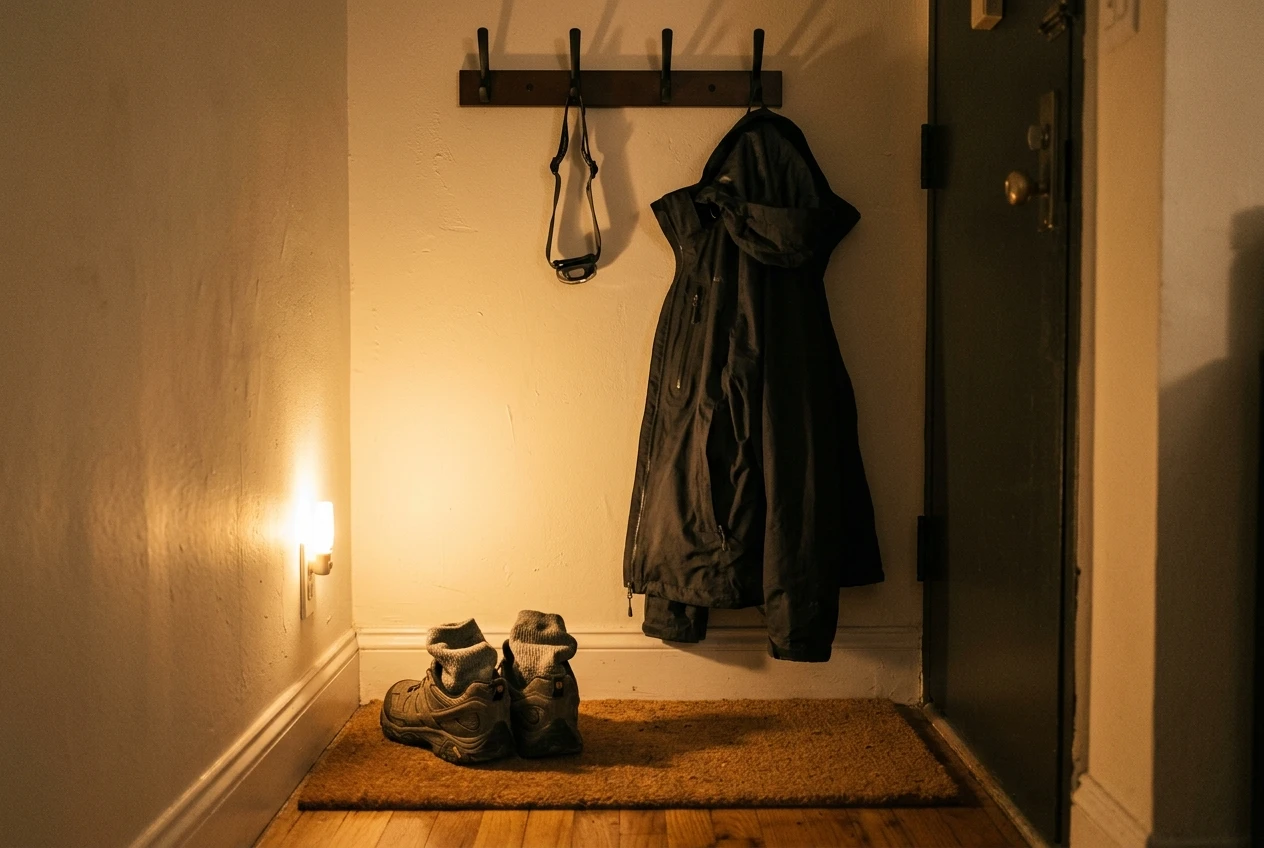
Put a pair of closed, sturdy, flat shoes next to the door or beside the bed. Slippers, sandals, and bare feet are risky on stairs strewn with debris or water, and a twisted ankle on floor four is a serious problem when you still have six floors to go. Keep a pair of socks tucked inside the shoes.
Beside the shoes, hang a jacket suited to your climate and the season. In 2026, as in any year, November weather in many cities calls for a warm layer, and a rain shell is useful in most places year-round. Wearing a layer on the way down also saves bag space.
What does go in the bag is a small clothing kit: a spare pair of socks, a hat, and a thin pair of gloves or a compact emergency blanket if you live somewhere cold. Wet socks are a common cause of misery on a long walk, so the spare pair earns its place.
Documents, cash, medications and phone power for the first day outside
The first day outside is mostly about logistics: proving who you are, paying for things, taking your medication, and staying in contact. These items are small and light, and they are the hardest to replace in a hurry.
Documents. Keep copies, not originals, in a waterproof sleeve or a zip bag. Useful ones include photo ID, proof of address, insurance details, and a list of key phone numbers written on paper. Phones die, and paper does not. Store a photo of each document on your phone and in cloud storage as well.
Cash. Card readers and ATMs often go down when the power does. Small bills are more useful than large ones, because making change may be difficult. Decide an amount that suits your budget and keep it in the bag.
Medications. Pack a supply of any prescription medicine you rely on, with the labels on. Ask your pharmacist or doctor how to keep a rotating spare supply and how to store it safely, since this depends on the medicine. Add a short written list of your conditions, doses, and allergies. Include basics such as a few adhesive bandages and any personal items like glasses, a spare pair of contact lenses, or a hearing aid battery if you need them.
Phone power. A phone is your map, light, and line to family, so keep it charged. A compact power bank with a short charging cable lives in the bag, and you should recharge it on a schedule so it is not empty when you need it. Switching the phone to low-power mode and turning the screen brightness down stretches the battery further.
Water and food: how little to carry, and what to leave to your home stockpile
Water and food are where most go bags get too heavy. The bag only needs to bridge the gap between leaving home and reaching help, a shelter, a relative’s place, or a store that is open. It is not meant to feed you for a week.
For water, carry a modest amount and a way to make more. One or two bottles will do for the trip down and the first stretch of walking. A compact filter or purification tablets let you treat water you find along the way without carrying all of it. The article on portable water filters that fit in a kitchen drawer explains how these work and when they are worth having. Keep the bulk of your water at home. The article on storing emergency water in a small apartment deals with that side of planning.
For food, choose items that are light, need no cooking, and survive heat and rattling around. Energy bars, nuts, dried fruit, and similar foods fit. Pack enough for a day or so and leave the rest of your supply in the pantry; the guide to fitting a two-week pantry into a studio kitchen covers that stockpile.
If you have to leave and cannot come back, your home stockpile will not help you. If you can come back, the stockpile will be waiting. Either way, the go bag stays light.
Pets, children and neighbours who need help: adjusting the bag for the people you descend with
A bag packed for one healthy adult needs changes when other people or animals are coming along.
Pets. A cat needs a carrier, and a carrier takes one hand, which means you can no longer hold the rail with that hand. A backpack-style carrier solves this for small animals. For a dog, use a short leash that you can hold while holding the rail, and pack a collapsible bowl, a small bag of food, waste bags, and a copy of vaccination records. Practice carrying your pet down the stairs before you need to. Some animals freeze or panic on stairs, and you should find that out in advance.
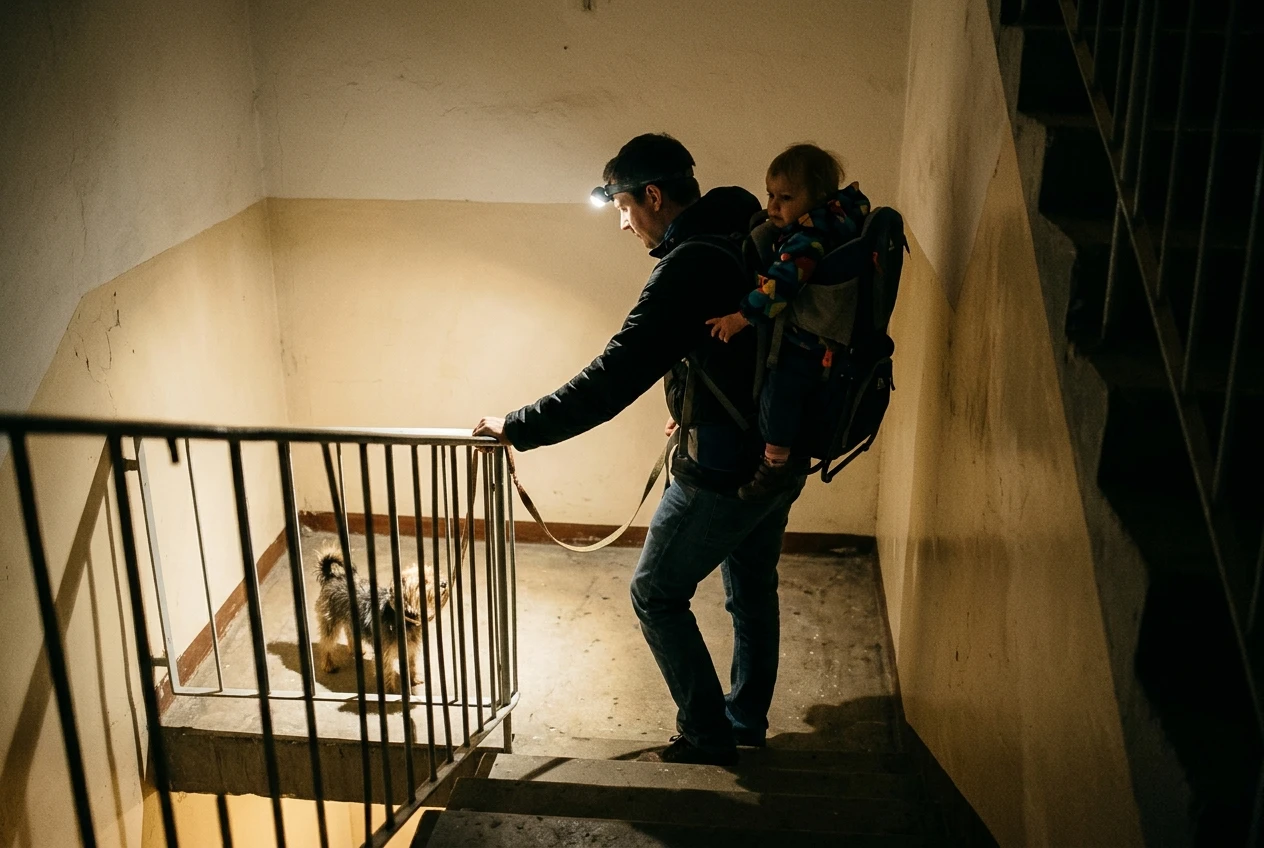
Children. Young children walk slowly and tire quickly, and you may have to carry them part of the way. That makes your own bag weight more critical, because you may be carrying a child as well. Give older children a small pack with a light, a whistle, and a snack, and teach them to stay close and hold the rail. Write your phone number on a card in their pocket. Bring one comfort item, such as a small toy, for a child who may be frightened.
Neighbours. In a high-rise, the people on your landing may include someone who cannot manage ten flights alone, such as an older resident or a person with a mobility problem. Know who they are before an emergency, and agree in advance how you would help each other. Your bag can include a few extra items for sharing, such as an extra light or a spare power bank, but your first responsibility is to keep your own load manageable so you can lend a hand.
Where to keep the bag and how to rehearse the walk down
Store the bag near the exit you would actually use, such as a hall closet or a hook beside the door, not at the back of a bedroom closet under other things. You should be able to grab it in the dark without moving anything. Keep the shoes, jacket, and a headlamp next to it.
Check the bag twice a year, and set a reminder on your phone for it. Replace expired food and medication, swap batteries, refresh documents, and adjust the clothing for the season. Weigh the bag each time. Bags tend to creep heavier as you add things, so any new item should come with a decision about what leaves.
The rehearsal is the most useful part. Walk down your own stairwell with the bag on your back, in daylight first, then once with the lights off at home and only the headlamp. Count the floors, note where the landings turn, find which doors lock behind you, and learn where the stairs let out at the bottom. Time yourself, and notice where the bag shifts or the straps rub. Then walk back up and adjust.
Do the walk once with whoever lives with you, including the dog if you have one. A plan that has been walked once is far easier to follow when it counts.
Start with one trip down your own stairs
The bag you pack will only be as good as the walk you have tested it on. If you are still deciding what else to keep at home, the guide to emergency supplies that earn their space in a small apartment helps you sort the essentials from the clutter.
Then load the go bag, put it on your back, and walk down your own stairs once, all ten floors. Note what felt heavy, what you could not reach, and what you wished you had left behind, and change the bag before you put it back by the door.